
The great John Denton, master of flash, comes to the south coast on 20th May and I'm booked in for a full day on-location model shooting with him!!!!
John is a memeber of the SWPP, Society of Wedding and Portrait Photograpers, so every couple months there's a new lighting course with a top photographer.
With luck I'll be able to keep up with all the info and learning oportunities that John will be throwing at myself and the twelve or so other during this top of the range one day course. I've been a fan of Denton's portrait style for a number of years and this is going to be the highlight of my year.
ASAP I'll be posting up some of my results so you can see what I've learnt and how I coped with the pressure of being put on the spot with a top UK model, a location I've not previously sussed out, and lighting which I shall try to be prepared for but am not sure of - might be mine or could be John's ideas.
Really looking forward to this challenging day which every self-respecting portrait photographer should be scrambling to get onto - can't wait!!!!!
Sunday, 12 May 2013


Sunday, 13 January 2013
Flash Vs LED torch
A torch and LED lighting capture a part open book proving that low powered lights can yield amazing results.
Let's look at how substituting one of the light sources with a low powered flash will help us understand the relationship of continuous lighting with that of a flashgun, an understanding of which we might one day need while on a location portrait-photoshoot when we want to capture a lovely sunset as a background behind the subject.
A flashgun exposes our subject in around 1/1,000th of a second regardless of the shutter speed, (below the sync speed of 1/200th). Meanwhile, we are using those same shutter speeds to control the intensity of the LED light source - longer means brighter and shorter gives a darker image. You might or might not notice that the flash exposure never changed, but more of this a moment.
A typical closeup or table top still life scenario might be :- We need a good depth of focus for our subject and decide on F11. The LED block at twelve inches requires a shutter speed of 1 second. This is okay for the flash as that is all over and finished, as we know, in 1/1,000th - it doesn't matter that the shutter is still open so it can carry on capturing the LED lighting.
This means we could make the exposure time longer to effectively create more light from the LED's without effecting the flash exposure. This is a hint that flash and continuous lighting are governed via separate camera controls - flash with aperture and continuous light via shutter speed. For instance, a longer exposure would give us more time to move the LED light slowly around the subject and we could eliminate all shadows. I say slowly as the exposure is one second so each position of the light needs to be for one second otherwise that part of the overall exposure will be too dark. Moving it slowly will allow that part of the subject to look balanced, while a faster movement will under expose.
So it looks like speed of movement from the light source or shutter speed governs how intense the light is.
We could even leave the shutter open for thirty seconds, which most digital cameras are capable of, and use the LED on/off swith to make our exposure of one second. This is assuming we are in a dark room, shed, skittle alley, etc.
We might also, during the same exposure, switch the LED back on with it in a different position and illuminate the shadow side of your subject from just a little bit further away thereby creating a softer shadow and we start to appreciate what lighting ratios are all about.
Meanwhile, our flashgun could also be moved, closer for more light or further away for less. We can also vary the softness of a flash by keeping to the same distance, doubling the output and bouncing it into a handheld reflector, or off a white wall, piece of card, even a sheet of newspaper, or the inside of a helium party balloon which is a matt finish alluminium and makes a superb reflector when taped over a piece of cardboard.
Same as the LED the flash can be moved and exposed several times during a thirty second exposure. Fire it once straight on from the right for a sharp shadow, then move it to the left side at the same distance but this time bounce it into a reflector and the shadows become softer by between one stop and two stops.
By now it should have become clear that shutter speeds control continuous lighting while aperture controls the flash. What else can control the flashgun? Distance, closer for more light, further away for less intensity. Then there are all the different powers from full whack all the way down to 1/128th power.
Another consideration is the aperture of F11, the higher the number the lower the lighting power from both continuous light and flashgun, but is going to throw a spanner in the works if we want to stick with the F11 we originally wanted for our required depth of focus.
A lower aperture such as F5.6 means we have less time to play around with our lighting, or does it? No, we merely shift our lights to exactly double the distance and we are right back to using all the timings and scenarios above. There is a complicated formulea which we don't neeed to confuse ourselves with called inverse square law but thankfully the way F numbers are worked out means we get exactly the same lighting power by doubling the distance and dropping two stops.
Hope your not too confused but my Yeo Photo Group camera club will be running through this several times on Tuesday evenings and will be using this basic information many times at during the next twelve months.
Let's look at how substituting one of the light sources with a low powered flash will help us understand the relationship of continuous lighting with that of a flashgun, an understanding of which we might one day need while on a location portrait-photoshoot when we want to capture a lovely sunset as a background behind the subject.
A flashgun exposes our subject in around 1/1,000th of a second regardless of the shutter speed, (below the sync speed of 1/200th). Meanwhile, we are using those same shutter speeds to control the intensity of the LED light source - longer means brighter and shorter gives a darker image. You might or might not notice that the flash exposure never changed, but more of this a moment.
A typical closeup or table top still life scenario might be :- We need a good depth of focus for our subject and decide on F11. The LED block at twelve inches requires a shutter speed of 1 second. This is okay for the flash as that is all over and finished, as we know, in 1/1,000th - it doesn't matter that the shutter is still open so it can carry on capturing the LED lighting.
This means we could make the exposure time longer to effectively create more light from the LED's without effecting the flash exposure. This is a hint that flash and continuous lighting are governed via separate camera controls - flash with aperture and continuous light via shutter speed. For instance, a longer exposure would give us more time to move the LED light slowly around the subject and we could eliminate all shadows. I say slowly as the exposure is one second so each position of the light needs to be for one second otherwise that part of the overall exposure will be too dark. Moving it slowly will allow that part of the subject to look balanced, while a faster movement will under expose.
So it looks like speed of movement from the light source or shutter speed governs how intense the light is.
We could even leave the shutter open for thirty seconds, which most digital cameras are capable of, and use the LED on/off swith to make our exposure of one second. This is assuming we are in a dark room, shed, skittle alley, etc.
We might also, during the same exposure, switch the LED back on with it in a different position and illuminate the shadow side of your subject from just a little bit further away thereby creating a softer shadow and we start to appreciate what lighting ratios are all about.
Meanwhile, our flashgun could also be moved, closer for more light or further away for less. We can also vary the softness of a flash by keeping to the same distance, doubling the output and bouncing it into a handheld reflector, or off a white wall, piece of card, even a sheet of newspaper, or the inside of a helium party balloon which is a matt finish alluminium and makes a superb reflector when taped over a piece of cardboard.
Same as the LED the flash can be moved and exposed several times during a thirty second exposure. Fire it once straight on from the right for a sharp shadow, then move it to the left side at the same distance but this time bounce it into a reflector and the shadows become softer by between one stop and two stops.
By now it should have become clear that shutter speeds control continuous lighting while aperture controls the flash. What else can control the flashgun? Distance, closer for more light, further away for less intensity. Then there are all the different powers from full whack all the way down to 1/128th power.
Another consideration is the aperture of F11, the higher the number the lower the lighting power from both continuous light and flashgun, but is going to throw a spanner in the works if we want to stick with the F11 we originally wanted for our required depth of focus.
A lower aperture such as F5.6 means we have less time to play around with our lighting, or does it? No, we merely shift our lights to exactly double the distance and we are right back to using all the timings and scenarios above. There is a complicated formulea which we don't neeed to confuse ourselves with called inverse square law but thankfully the way F numbers are worked out means we get exactly the same lighting power by doubling the distance and dropping two stops.
Hope your not too confused but my Yeo Photo Group camera club will be running through this several times on Tuesday evenings and will be using this basic information many times at during the next twelve months.
Sunday, 9 December 2012
Wow, what has Blogger done to their site since I was last on the scene? It's a work of art now to get up the 'New post' box.
Been so busy doing plumbing and building repairs , yet strangely I've also managed to squeeze in even more photography than ever before with around 4 to 8 photo shoots per week. Most of these have been portrait on location shoots in the woods, by the sea, on hill tops and up to my knees in rivers, plus several portrait sessions in the sea with waves lapping at my pockets. My flashguns and stands have always been with me as my passion for great lighting knows no bounds, even in the surf.

Tonii at WestBay obviously used no flash at all but this is one of the extremely rare moments when I used pure natural light.
Exposing for the brightest part of the sky involves noting the auto exposure settings and then closing down two stops as a starting point. Usually I leave the white balance set to 'Flash' as I prefer the warmer tones. Same too with night photography when I want the tungsten street lights to resemble tugnsten street lights.

Now let's have a look at Tonii in this dis-used wartime building with its gorgeous grafitti. Taken with two flashes, one front and back, with Tonii sandwiched between. I call this sandwich lighting for good reason, preferably with a softbox on the nearest flash while the far light has no modifier and is often wearing a DIY grid.
I quite liked the effect of flare from the rim light and decided to stick with it for the rest of this part of the shoot.
 Two softboxes help blend the warm daylight into this image with almost no visible cut off point between the two light sources.
Tonii is so patient and is helpful beyond measure, Although she is never backward in saying if she doesn't like a particular shot, which gets deleted there and then.
So yes, I do show my models / helpers the images as they gradually develope into the finshed product.
The church is run byMichael, a good friend of mine, who says we can borrow it any time he's not using it. Must remember to give him a copy of some of the better images.
 In this shot of Danii leaping over a log in a local forest I wanted to keep the daylight as a blur, plus create a blur behind her. The choices are either go with a stanionary camera on a tripod and catch the blur of white material streaming out behind Danii and freeze her with second curtain flash. Or, I pan with her and get streaky daylight.
After a couple shots of each category an idea sprang to mind - what if I could manage both trains of thought in one shot. By arranging for Danii to be running towards the darker area and panning with her I could turn the camera faster, in the same direction, after the flash had gone off in first curtain sync. I hasten to add that I was using about 1/10 of a second. Also, by the third image, I realise that although I'm turning the camera faster I'm panning it a little too fast. Because the flash is the main illumination here then Danii is less likely to record against the blackness. Her front foot is moving fast enough not to record as a great deal of blur due to the flash, although I did have to go into Photoshop and take out a small amount of blur in that area.
Been so busy doing plumbing and building repairs , yet strangely I've also managed to squeeze in even more photography than ever before with around 4 to 8 photo shoots per week. Most of these have been portrait on location shoots in the woods, by the sea, on hill tops and up to my knees in rivers, plus several portrait sessions in the sea with waves lapping at my pockets. My flashguns and stands have always been with me as my passion for great lighting knows no bounds, even in the surf.

Tonii at WestBay obviously used no flash at all but this is one of the extremely rare moments when I used pure natural light.
Exposing for the brightest part of the sky involves noting the auto exposure settings and then closing down two stops as a starting point. Usually I leave the white balance set to 'Flash' as I prefer the warmer tones. Same too with night photography when I want the tungsten street lights to resemble tugnsten street lights.

Now let's have a look at Tonii in this dis-used wartime building with its gorgeous grafitti. Taken with two flashes, one front and back, with Tonii sandwiched between. I call this sandwich lighting for good reason, preferably with a softbox on the nearest flash while the far light has no modifier and is often wearing a DIY grid.
I quite liked the effect of flare from the rim light and decided to stick with it for the rest of this part of the shoot.

Tonii is so patient and is helpful beyond measure, Although she is never backward in saying if she doesn't like a particular shot, which gets deleted there and then.
So yes, I do show my models / helpers the images as they gradually develope into the finshed product.
The church is run byMichael, a good friend of mine, who says we can borrow it any time he's not using it. Must remember to give him a copy of some of the better images.

After a couple shots of each category an idea sprang to mind - what if I could manage both trains of thought in one shot. By arranging for Danii to be running towards the darker area and panning with her I could turn the camera faster, in the same direction, after the flash had gone off in first curtain sync. I hasten to add that I was using about 1/10 of a second. Also, by the third image, I realise that although I'm turning the camera faster I'm panning it a little too fast. Because the flash is the main illumination here then Danii is less likely to record against the blackness. Her front foot is moving fast enough not to record as a great deal of blur due to the flash, although I did have to go into Photoshop and take out a small amount of blur in that area.
Saturday, 28 July 2012
Latest news from Keith Robins
It's been ages since my last blog post here but Keith Robins Photography is still around and busier than ever. For instance, I recently surprised myself and managed ten on-location portait photoshoots in eight days besides working a fifty hour week in my plumbing business.
Now I've turned 67 it should be time to relax and put my feet up. But, as luck would have it, my long term hobby is photographing young ladies so I've brushed the dust off my camera, charged up a few batteries and taken a few on-location photo trips into the countrtside. River shoots seem to feature quite highly in the requests from young feminine beauties closely followed by 'on-the-rocks' at the seaside. If this is what retirement is all about - bring it on!


I'm not sure how or why but Facebook was kind enough to give me a private page plus a business page, which I don't mind at all as it gives me a couple of options when I upload the results from these exciting photo sessions. Okay, so Facebook resizes all the images for me automatically, which helps make them less desirable to rip-off merchants, plus there is plenty of space for loads and loads of albums. This in turn has attracted quite a few viewers and resulted in new models contacting me ref photoshoots.


I normally work on a TFCD basis which means I give some of my time and skill, the model gives her time and good looks. The model gets a set of CD images and we both end up improving our portfolios.
Now, this might sound as if I'm losing out on a load of cash. But actually it's the very opposite - I'm saving myself money! What's happening is that I am now meeting some really attractive models, my persona and techniques have changed for the better. Plus, I consider myself a much better photographer and my skills level has shot through the roof.


I'm now in a position where I could start charging for my skills because I can physically prove that I'm the photographer who is capable of producing stunning results. Similar in a way, I suppose, to a brilliant violinist going on the X factor and winning and all his neighbours saying, 'Well I didn't know he could play like that!'
You have to show what you can do, how good you are and only then will Joe Public beat a path to your door. I look on Facebook as being my shop window, plus they even tell friends of friends how good you are - and it's all free!!!!
I'm gradually putting a two or three results from each of my most recent photography shoots, along with a write-up, on to my Facebook page at:- www.facebook.com/keithrobinsphotography
I also run a blog based website at:- http://www.keithrobinsphotography.co.uk
Meanwhile, seeing as I'm now drawing a pension and my customers won't let me retire in peace, what's the point in charging loads of money and then paying income tax on all of it? Or am I sonehow missing the point?
Now I've turned 67 it should be time to relax and put my feet up. But, as luck would have it, my long term hobby is photographing young ladies so I've brushed the dust off my camera, charged up a few batteries and taken a few on-location photo trips into the countrtside. River shoots seem to feature quite highly in the requests from young feminine beauties closely followed by 'on-the-rocks' at the seaside. If this is what retirement is all about - bring it on!


I'm not sure how or why but Facebook was kind enough to give me a private page plus a business page, which I don't mind at all as it gives me a couple of options when I upload the results from these exciting photo sessions. Okay, so Facebook resizes all the images for me automatically, which helps make them less desirable to rip-off merchants, plus there is plenty of space for loads and loads of albums. This in turn has attracted quite a few viewers and resulted in new models contacting me ref photoshoots.


I normally work on a TFCD basis which means I give some of my time and skill, the model gives her time and good looks. The model gets a set of CD images and we both end up improving our portfolios.
Now, this might sound as if I'm losing out on a load of cash. But actually it's the very opposite - I'm saving myself money! What's happening is that I am now meeting some really attractive models, my persona and techniques have changed for the better. Plus, I consider myself a much better photographer and my skills level has shot through the roof.


I'm now in a position where I could start charging for my skills because I can physically prove that I'm the photographer who is capable of producing stunning results. Similar in a way, I suppose, to a brilliant violinist going on the X factor and winning and all his neighbours saying, 'Well I didn't know he could play like that!'
You have to show what you can do, how good you are and only then will Joe Public beat a path to your door. I look on Facebook as being my shop window, plus they even tell friends of friends how good you are - and it's all free!!!!
I'm gradually putting a two or three results from each of my most recent photography shoots, along with a write-up, on to my Facebook page at:- www.facebook.com/keithrobinsphotography
I also run a blog based website at:- http://www.keithrobinsphotography.co.uk
Meanwhile, seeing as I'm now drawing a pension and my customers won't let me retire in peace, what's the point in charging loads of money and then paying income tax on all of it? Or am I sonehow missing the point?
Tuesday, 29 November 2011
Just been on a 'Subtraction of Light' course with Mark Cleghorn of PhotoTraining4U fame in Cardiff.
Seems like the addition of flash is not quite as necessary as I'd previously thought.
In fact, during the five day course we were starting at 6am and photographing with extended exposures of up to two minutes. On a pier in low lying mist by 10am and then later we went under the pier to discover the equivalent of studio lighting!
Mark's 'Subtraction of Light' course has changed my whole outlook on how I take portraits with the purchase of a Canon 85mm F1.8 lens. I've also begun using the 'Picture Style' modes on my Canon 5D with black and white plus a red filter being my favourite.
Candid photography has never been one of my favourite pastimes, but it is growing on me. Street portraits however, turned ot to be far more rewarding than anything I've previouly tackled with many new contacts each time I take to the streets.
Portraits in the woods now makes me look for 'window light' and a reflector is higher on my list of accessories than a tripod ever was.
But don't worry I'm going to forgo the benefits of using a flashgun.
I'll try to keep you posted on a more regular basis with plenty of results form my YeoPhotoGroup course which now takes place on a Tuesday evening. This is a free range group with no charges, no officialdom and no real rules apart from the basis of, 'We all help each other to enjoy our photography and don't give any negative comments'.
We now have a facebook area and regularly post results, ideas, and hints.
Keith.


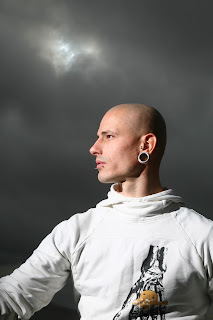


Seems like the addition of flash is not quite as necessary as I'd previously thought.
In fact, during the five day course we were starting at 6am and photographing with extended exposures of up to two minutes. On a pier in low lying mist by 10am and then later we went under the pier to discover the equivalent of studio lighting!
Mark's 'Subtraction of Light' course has changed my whole outlook on how I take portraits with the purchase of a Canon 85mm F1.8 lens. I've also begun using the 'Picture Style' modes on my Canon 5D with black and white plus a red filter being my favourite.
Candid photography has never been one of my favourite pastimes, but it is growing on me. Street portraits however, turned ot to be far more rewarding than anything I've previouly tackled with many new contacts each time I take to the streets.
Portraits in the woods now makes me look for 'window light' and a reflector is higher on my list of accessories than a tripod ever was.
But don't worry I'm going to forgo the benefits of using a flashgun.
I'll try to keep you posted on a more regular basis with plenty of results form my YeoPhotoGroup course which now takes place on a Tuesday evening. This is a free range group with no charges, no officialdom and no real rules apart from the basis of, 'We all help each other to enjoy our photography and don't give any negative comments'.
We now have a facebook area and regularly post results, ideas, and hints.
Keith.


Monday, 2 May 2011
 Miniscule portrait studio at 1.5 m by 1 metre!
A narrow shop doorway, model four feet away and a single off-camera flashgun bounced off a four inch wide doorframe is all Keith Robins Photography needs to create a superb portrait.
Okay so there is a bit of help from the sun which illuminates Lola's left cheek via the white wall outside. For some of these photos I use my Canon 580 EX with the head reversed and bouncing it off a white tee shirt to my left. The flash is set on ETTL while the camera stays on manual, enabling me to control the daylight to a precise exposure.
Getting Lola to look towards the somewhat darker shop interior helps to open up her eyes and as we all know, it's the eyes that can make or break a good portrait.
 I came across Lola a week ago via 'Model Mayhem', a sort of online modeling agency where you sign up, wait for approval and eventually if they think you're good enough you can send out friend requests followed by email contacts with the models where MM act as intermediaries, a sort of buffer zone.
Lola is a newbie to the site as a model but I've had nearly forty years behind my camera as a portrait photographer and i've decided that her portfolio needs a boost, come to think of it so does mine! Besides, not only do I need the practice but, I can't remember ever having photographed a girl with such beautiful red hair or such incredible blue eyes. Mostly, though, I could see the possibilities of some amazing photos with Lola and on this count I think I am definitely about to be proved correct.

We arrange to meet at a carpark in Glastonbury on May 1st and blow me most of the roads are closed due to a series of bank holiday fun runs, the carpark is full but I somehow manage to squeeze in. Lola's mum has come along to help hold one of the flashguns as I can only carry one lighting stand along with all the other stuff us photographers consider important - so why do we never use it all?
I often carry two large bags and pull a kitchen waste bin on a shopping trolley full of lighting stands, brollies, reflectors and tripod, but this time it is just a bagful of four flashes, stand adaptors and triggers.
 'Proper Job' supermarket carpark provides a small area of shade under a tree set in the pavement which I use to keep the brilliant sun off Lola's gorgeous red hair - I wanted to create my own strobist lighting arrangements, my own sunlight if you like.
One stand, a Vivitar 285 into a small brolly, a second 285 is held by mum replicated the sun to great effect. Both guns are firing via cheapo radio triggers from China at £60 for a set of three recievers and one transmitter. The benefits are that Lola's blue eyes opened up as she looked into the shade. What appears to be sunlight shining on Lola's cheek is really a Vivitar at 1/2 power, but without a modifier it resembles direct sunlight. The second 285 is bouncing into the small brolly also set to 1/2 power, but due to it bouncing into a brolly this is reduced to around 1/4 power and the biggest benefit is that it's really soft due to the close proximity - about three feet.
You wouldn't think that a carpark would make any sort of decent backdrop but it does. Not having access to a studio should not put you off taking beautiful portraits like these, it is possible almost anywhere to create a work of art using flag lights. Strobism rules!
 Then we move on to a narrow shop doorway where Lola faces into the fairly dark interior with a weedy backyard and a whole mess of rainwater pipes in the background lit by sunlight.
Okay, so I didn't stay true strobist with the Vivtars for this part of the photoshoot as I want to push my understanding of the capabilities of Canon ETTL and whether I can still influence this modern automatic lighting technology, or, does it take over and mess up everything creative. To which the answer is - without my strobist knowledge of how to juggle exposure controls these photos of Lola will suffer big time.
Canon's interactive ETTL with more than one flash is now moving further down the list of things to absorb my precious time!
During the two hour shoot I take 115 photos, (eighty-five after editing), which Lola will get on a CD to go on her Facebook page, also on to her MM portfolio. I'm only too pleased to help this delightful young lady on her way as a model who is a joy to work with.
Will I use Model Mayhem again? Yes, without a doubt! Although it's a rather long winded method of contacting suitable models but it's for their protection and I can see why it has to be this way.
Will I be photographing Lola again? Yes, most definitely, can't wait!!!!
Sunday, 24 April 2011
 Popstar and strobist, Keith Robins Photography, in the bluebells!
This late evening popstar photoshoot required three flashguns, nothing technical though as time was short.
We were also short of an actual popstar so Trevor leaped in with a borrowed guitar.
Photo one gives an idea of the location and the little Vivitar 285HE of which I used two. These run on 6 volt motorcycle batteries as they are allergic to rechargable AA's. Third gun was a Miranda from Ebay at £2 which does run on rechargables. I've got two of these lovely little Miranda's and use them a lot.
 All the lighting stands, camera kit and other parphinalia we strobists think we really need, but hardly ever use, is carried in a kitchen waste bin fixed to a collapsible trolle with gaffer tape and bungee straps and is seen here standing in for Trevor while he puts on one of my old movie making wigs.
The trolley wheels folded up on the last photo trip and the weighty kit had to be carried back to the van. The buggy has since been adapted with a solid bar axle for just £2, but at only £12 from Maplins for the trolley I still ended up with a bargain.
 I wanted our lively popstar to leap in the air and look as if he's bellowing a few lyrics - He's a few years younger than myself so his knees can take the strain. A tip for those with spare cash and the means to transport it - how about a three foot diameter trampoline from Ebay for twenty quid?
Mounting the flashes onto a Bowens stand, an Elinchrom and an Interfit stand, (Yes I like variety), requires the use of hotshoe to lighting stand adaptors at £6 each off the internet. As nothing we strobists use ever seems to be compatible I've Araldited a DIY metal hotshoe foot on top of each of my flashguns, including my two Canon 580 EXlls, which has the bonus of bringing the flash window right next to a brolly shaft.
But then the breeze catches one of the brollies and a few swear words spring to mind. I now carry a tube of superglue and a few spare brollies.
By keeping one flash in shot the illusion of an outdoor stage venue was a last minute addition which we both liked, then decided that adding a CTO filter made it resemble the sun setting through the backdrop of trees, which we liked even more.
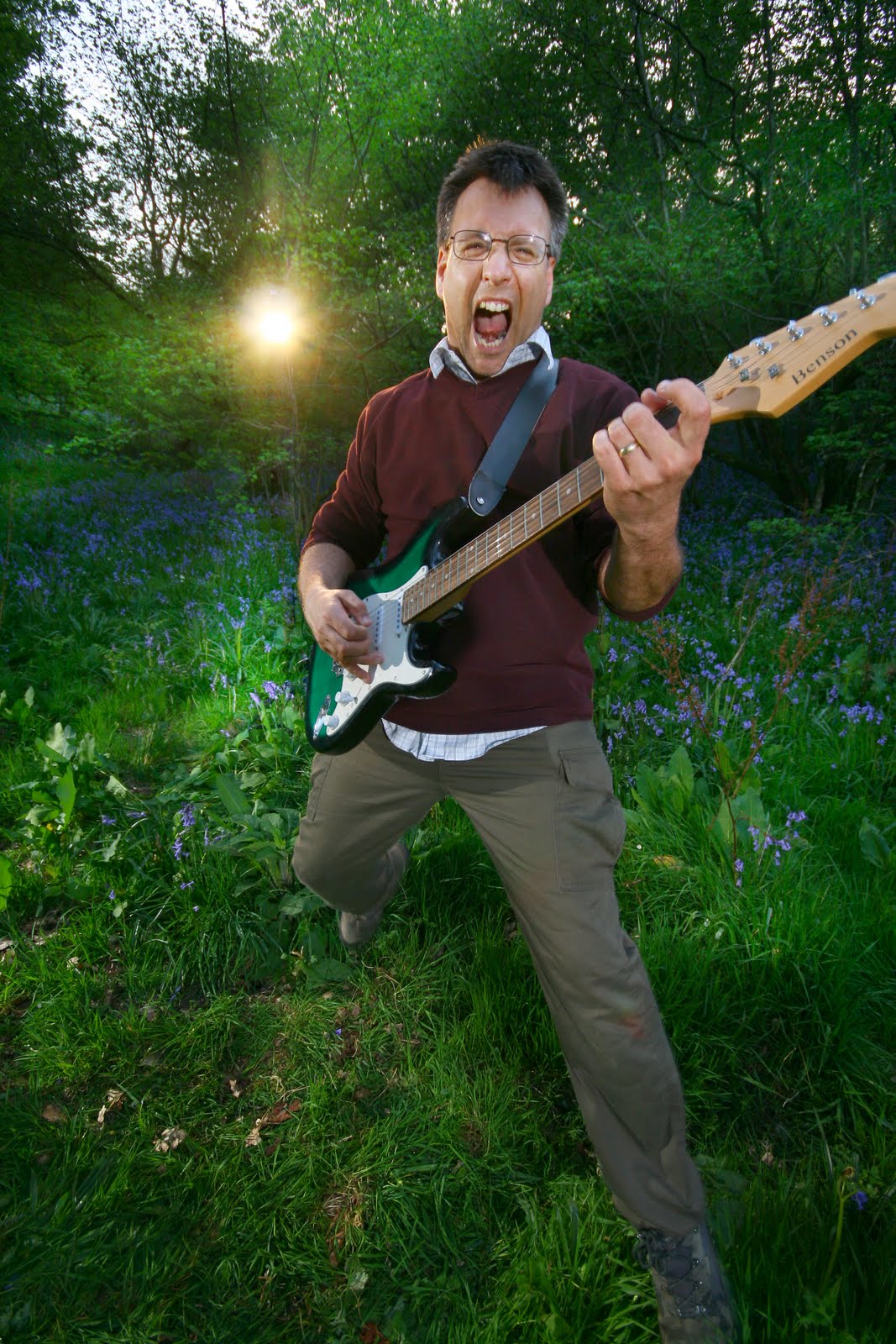 To retain the daylight level, which revealed detail in the bluebells, I used ISO 400 and a shutter speed of 1/80th. I did try 1/20th at F8 but the resulting blur was too distracting plus it darkened the flash too much.
Remember, shutter speeds control daylight and apertures control flash strength - higher shutter speed makes the sky/background darker and lower makes it lighter. ISO changes effect both flash strength and daylight levels so I usually leave the sensitivity set on 100 ISO.
Although the aperture effects both ambient and flash it is primarily the flash strength which is controlled via the F numbers - higher F number darker flash. Of course you could always move the flashgun further away to decrease the strength, or turn down the power setting.
I'm not going to go into how to use highspeed shutter sync right now as cameras and flashes vary so much. Best to study the techniques of this along with multiple dedicated flashes in your flashgun instruction book.
Of particular interest is the Nikon CLS (controlled lighting system), or the Canon equivalent. I've used multiple hotshoe flashguns for thirty five years and find the process simple, straight forward and easy - but these dedicated lighting systems are something else! Bear with me though and when I have sussed out how to use it successfully I'll pass the info on in this blog.
 Meanwhile, an aperture of F5.6 returned the best images making full use of the three flashes, of which the Vivitars were set to 1/16th power at six feet front and back and the Miranda on full power at around twenty feet. Keeping all the flashes in sync was an IShoot radio transmitter on the camera sending radio signals to a set of three IShoot receivers on the three flashguns.
 I bought this set of Ishoot triggers and the transmitter for £60 from a fellow photographer who wanted a Nikon fit, but then he found there is only Canon fit available.
I've since used these same triggers with Nikon, Olympus and my Canon cameras with equal success as I'm guessing all the little contacts don't actually do anything. They also work superbly with my Elinchrom studio lights and having four channels is a real boon in a busy studio environment.
Meanwhile Trevor is having a ball, leaping and shouting and I'm loving how these three amazing strobes are working together - absolutely wonderful lighting!
 Okay so next time we'll add a few more coloured filters and maybe a smoke machine, maybe even try adding a real sun filtering through the trees along with a studio flash to really challenge the sun's strength, but being an emergency plumber means time is often short.
Thank you Trevor for being a great sport and he says he is available for bookings, but don't ring him - he'll ring you.
Subscribe to:
Posts (Atom)